
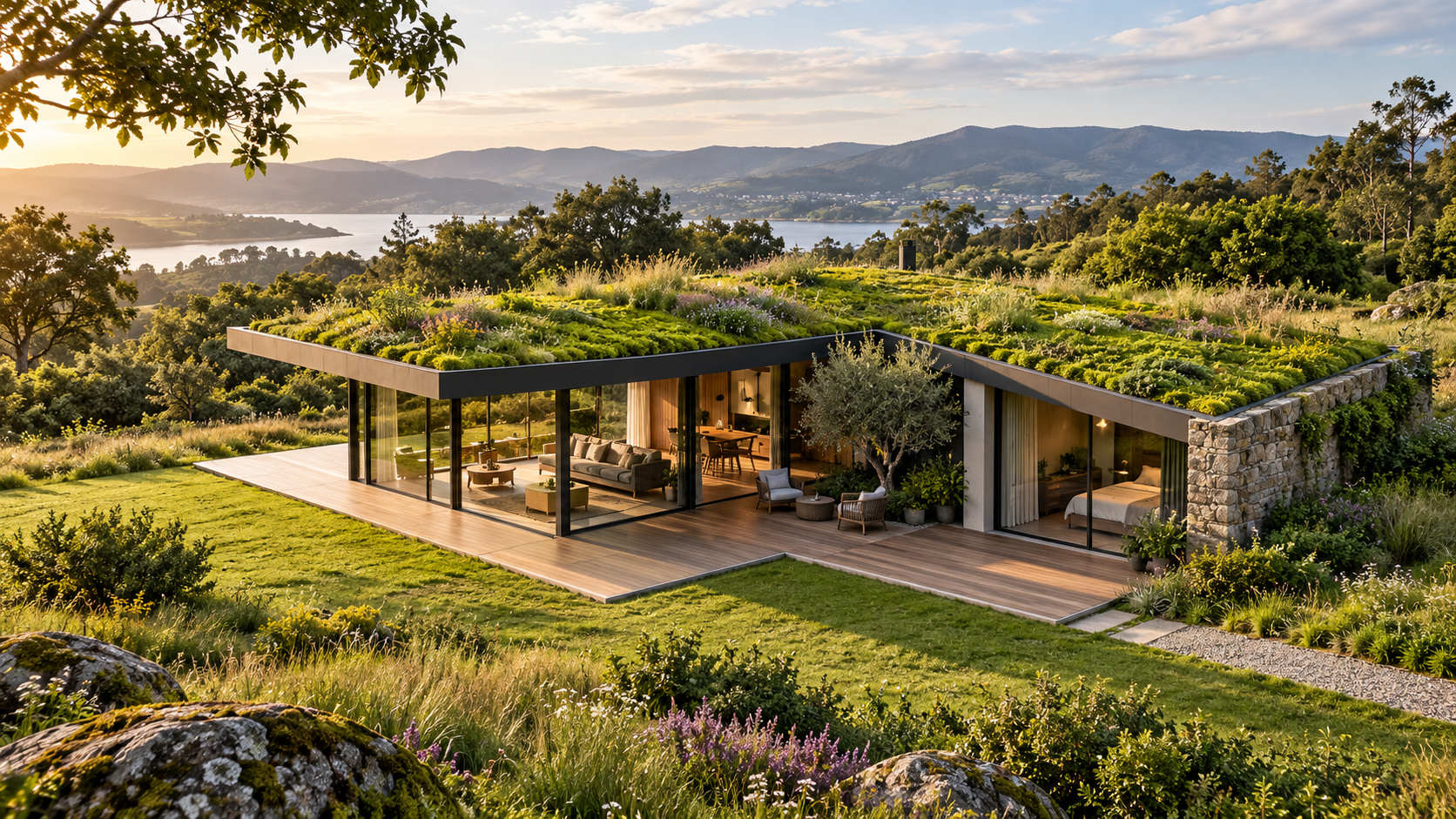
At Abeiro, we believe that building also means creating healthier, more efficient spaces that are connected to their surroundings. That is why green roofs and vertical gardens are becoming an increasingly interesting solution for homes, buildings, commercial premises and renovation projects.
In Galicia, where humidity, rain and the landscape are part of our identity, integrating vegetation into roofs and façades can bring comfort, beauty and added value to a property.
Green roofs and vertical gardens are not just an aesthetic feature. When properly designed, they help improve thermal insulation, reduce environmental impact, promote urban biodiversity and can contribute to better rainwater management.
They also transform often underused surfaces into living, pleasant and distinctive spaces.
A green roof incorporates vegetation onto a technically prepared roof system, with layers of waterproofing, drainage, substrate and planting.
There are two main types:
Extensive green roofs: lighter systems that require less maintenance and use resistant plants such as sedum, mosses, aromatic plants or ground-cover species. They are ideal for homes, residential buildings or industrial warehouses.
Intensive green roofs: these work like real elevated gardens. They can include grass, shrubs, seating areas and even small trees, provided the structure allows it. They are suitable for accessible terraces, hotels, residential communities or public buildings.
Vertical gardens make it possible to add vegetation to façades or interior walls without taking up usable floor space. They are a very attractive solution for urban homes, offices, commercial premises, hotels or hospitality spaces.
They can be installed using modular or hydroponic systems, adapting to the type of wall, orientation, available light and expected maintenance.
Choosing the right species is key to ensuring a good result. For outdoor spaces in Galicia, ferns, ivy, vinca, sedum, grasses, resistant aromatic plants and some varieties of hydrangeas or ground-cover plants can work well.
Indoors, plants such as pothos, spider plants, ficus pumila or ferns are often used, especially in spaces with indirect light and controlled humidity.
Green roofs and vertical gardens can improve thermal comfort, help dampen outside noise, retain part of the rainwater and create small habitats for insects, birds and pollinators.
They also give the building a more refined, natural and contemporary image, which is especially valuable in homes, commercial premises, hotels or projects looking to stand out.
Before installing a green roof or vertical garden, it is essential to study the structure, waterproofing, drainage, irrigation system and required maintenance.
Good design prevents future problems such as leaks, excess weight, moisture accumulation or plant species that are not suited to the environment.
At Abeiro, we analyse each project individually. We study the building, its orientation, exposure to wind and rain, technical possibilities, intended use and desired level of maintenance.
From there, we propose a balanced solution in terms of design, functionality, durability and cost.
Our goal is for vegetation not to be a decorative add-on, but a coherent part of the construction project.
Green roofs and vertical gardens make it possible to transform roofs, façades and walls into living spaces. They bring beauty, efficiency and a more direct connection with the environment.
At Abeiro, we are committed to more sustainable, comfortable projects that are ready for the future.
Would you like to incorporate a green roof, landscaped terrace or vertical garden into your home, commercial premises or building? Let’s talk about your project.

c/ San Roque 33, Bajo
Santiago de Compostela

© Abeiro